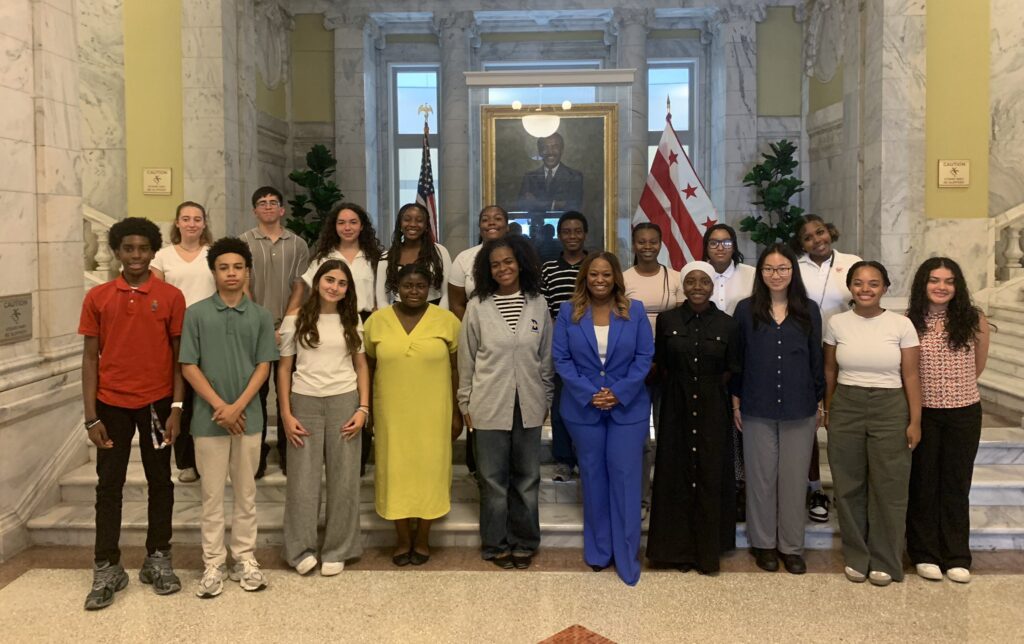
In honor of the Martin Luther King Jr. Holiday, Ward 4 Councilmember Janeese Lewis George introduced the DC Young Adult Corps Act of 2026, a bill that would establish the DC Young Adult Corps as a career and community service pathway for young adults ages 17-24.
The bill, which was co-introduced by Councilmembers Brianne Nadeau and Brooke Pinto, would provide young adults with paid, full-time service placements that address key community needs, while also fostering career growth and economic empowerment for the service program participants.
“After I graduated college, I performed a service year under AmeriCorps, and it was one of the most meaningful years of my life,” said Lewis George about the bill. “It helped me determine my next steps in life, and set me on a lifetime path of civic engagement and service to my community.”
“I introduced the DC Young Adult Corps Act of 2026 to attract more young adults to service while also giving them get a jump start for the future,” she added. “This bill creates a new workforce pipeline for young adults and at the same time addresses urgent community needs through the meaningful work DC Young Adult Corps members will accomplish during their service year.”
The bill aims to:
- Provide young adults who’ve graduated from high school or obtained a GED within the past 12 months with paid service opportunities that build professional, educational, and civic skills;
- Strengthen the District’s workforce pipeline through service placements aligned with community needs; and
- Support District agencies, nonprofits, and schools in advancing local priorities while developing the next generation of civic leaders
Under the bill, young adults 17-24 who are District residents and have graduated from high school or obtained an equivalent certification would be eligible for the service year program.
During the year of service, DC Young Adult Corps members would be placed in a full-time, paid position within a District agency, local school, nonprofit, or other approved organization. Upon successful completion, program graduates would receive an award of up to $3,000.